EXPLORER
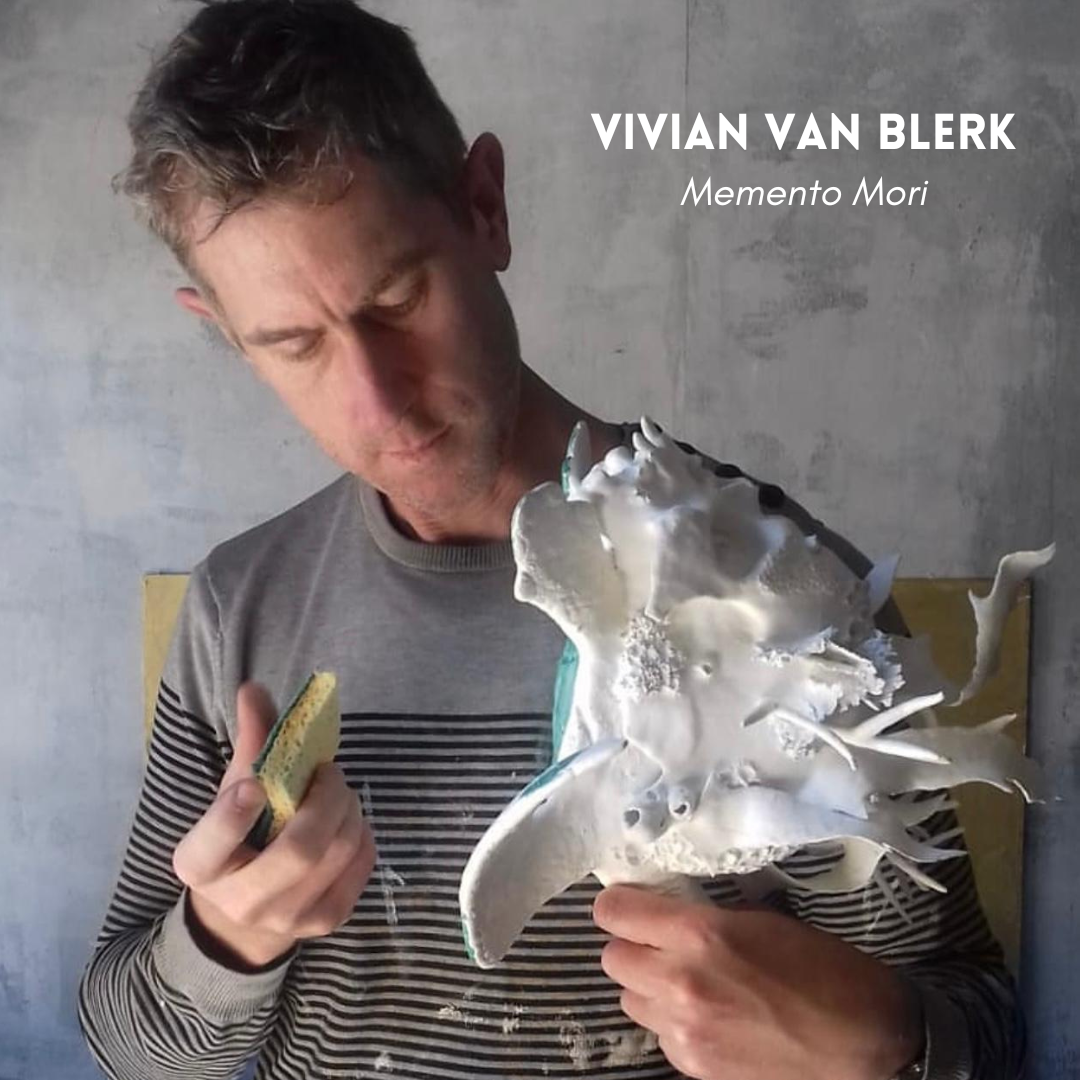
VIVIAN VAN BLERK
Memento Mori
Opening Friday, 23 May 6 - 9 pm
As part of Paris Gallery Weekend
Friday-Saturday 11 am - 7 pm
Sunday 2 - 6 pm
Exhibition May 23 - June 5, 2025
Tuesday-Friday 3 - 7 pm Saturday by appointment
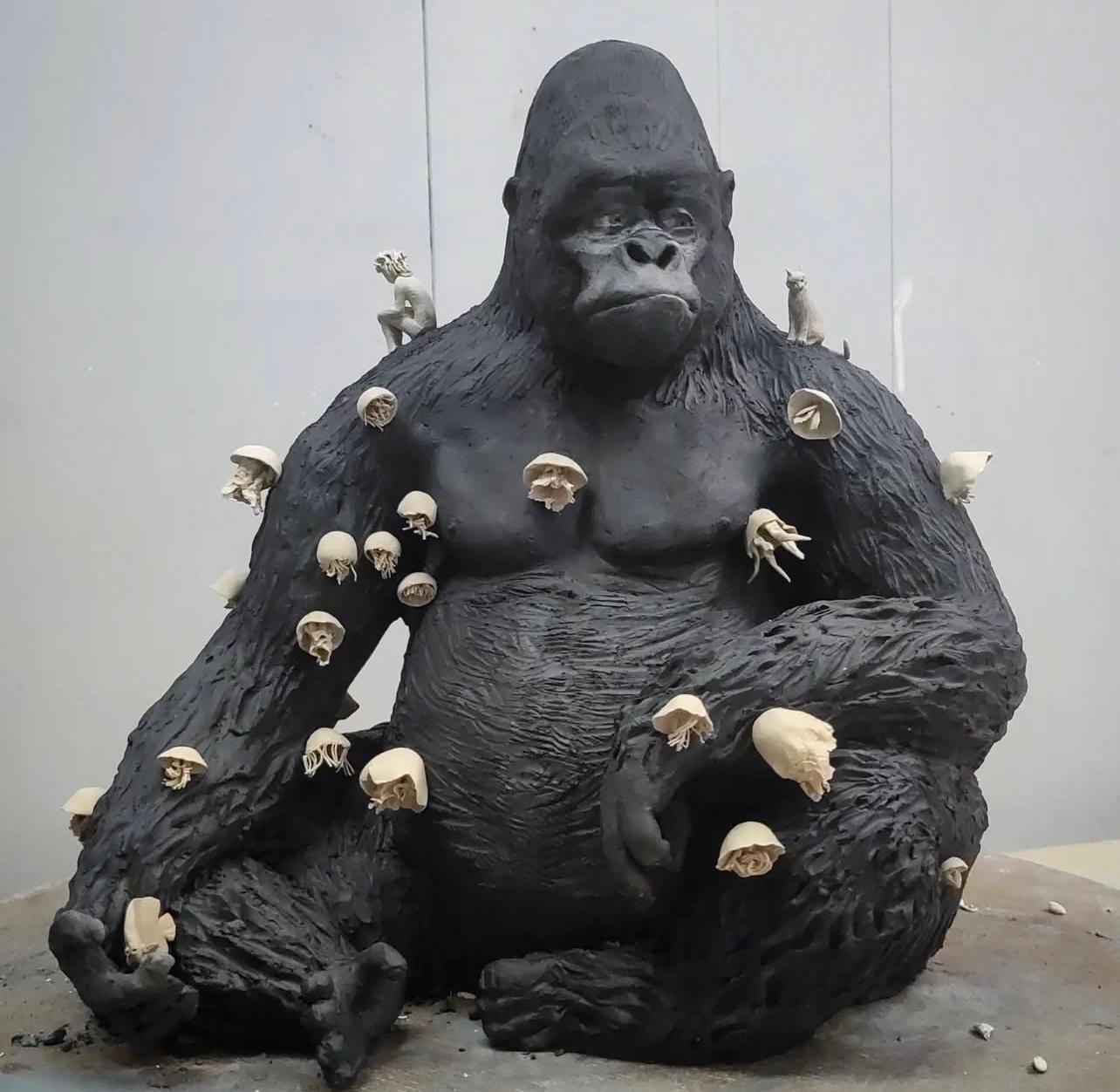
Born in South Africa in 1979 and deceased in July 2024 in his studio in La Courneuve (Paris), Vivian van Blerk was a multidisciplinary artist. Trained as a photographer, his works combine photography, painting, and sculpture. Since 2017, he also explored ceramics, which he described as a material “so concrete, so noble, and so fragile” with “no equal for expressing the precarious beauty of our existence.” Memento Mori is its ultimate incarnation.
Memento Mori
For more than twenty-five years, Vivian van Blerk has developed a body of work in which ceramics and photography intertwine to explore human fragility, memory, and the entangled destinies of humans and animals in the face of ecological crisis. From his early photographic tableaux of the 1990s to his recent clay and porcelain sculptures, van Blerk has created a distinctive visual language, blending theatricality with tragicomedy, symbolism with materiality.
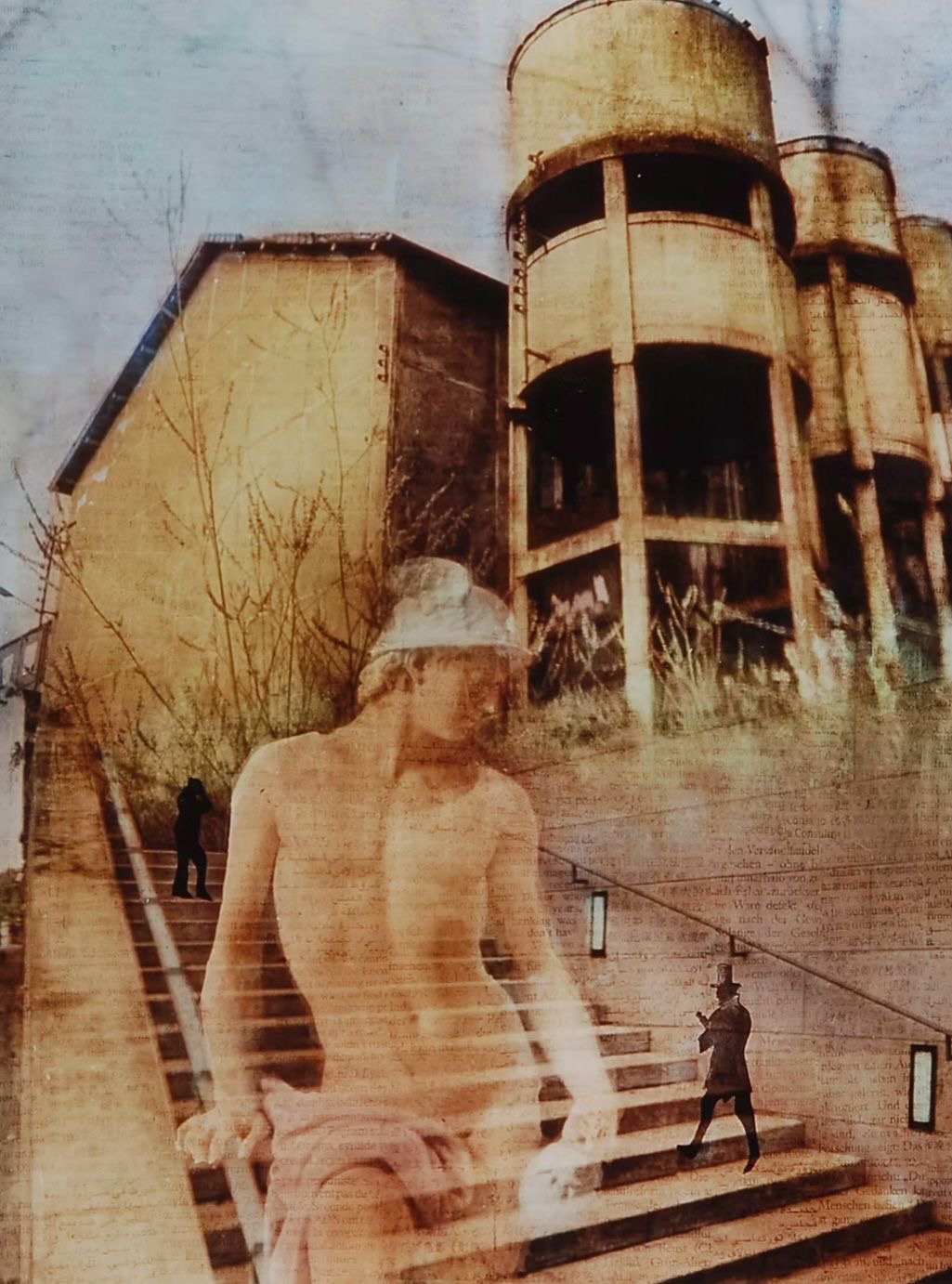
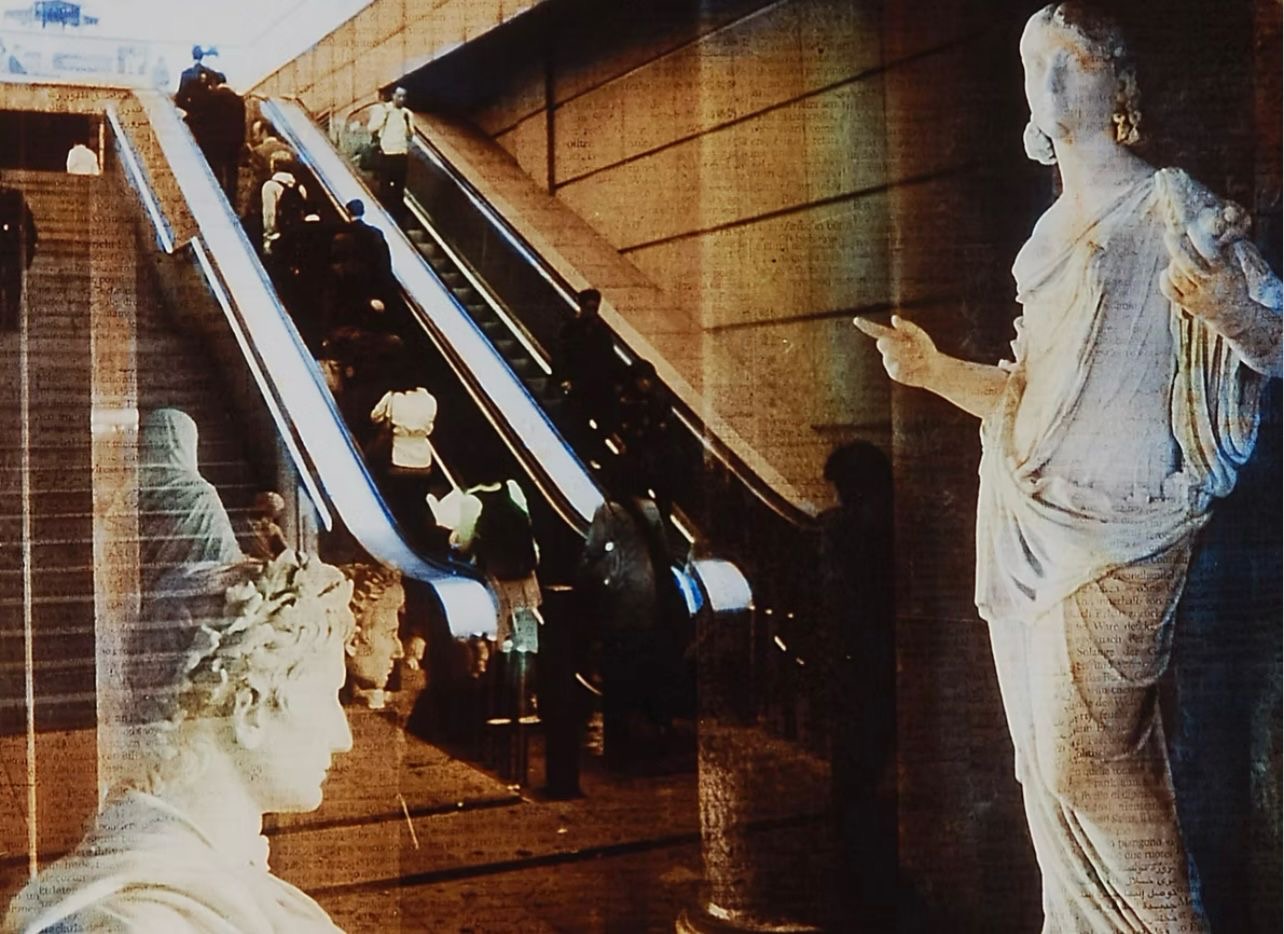
His photographic practice in the 1990s relied exclusively on traditional techniques such as silver gelatin printing and gum bichromate. Using meticulously constructed scale models and theatrical lighting, van Blerk produced images with a timeless, dreamlike quality — entirely without digital manipulation. These photographs evoked mythological scenes, enigmatic ruins, and ambiguous rituals, conjuring a world where memory, history, and fiction merge. Deeply material works, they testify to a craftsmanship that already foreshadows the precision of his ceramics.
This focus on time, decay, and absurdity continued, and deepened, when he turned to clay in the mid-2010s. Rather than abandoning photography, van Blerk expanded his vocabulary: His clay sculptures often became subjects for new photographic compositions, with photography now acting as both documentation and transformation. The two media are in dialogue, and both are at the heart of the Memento Mori exhibition.
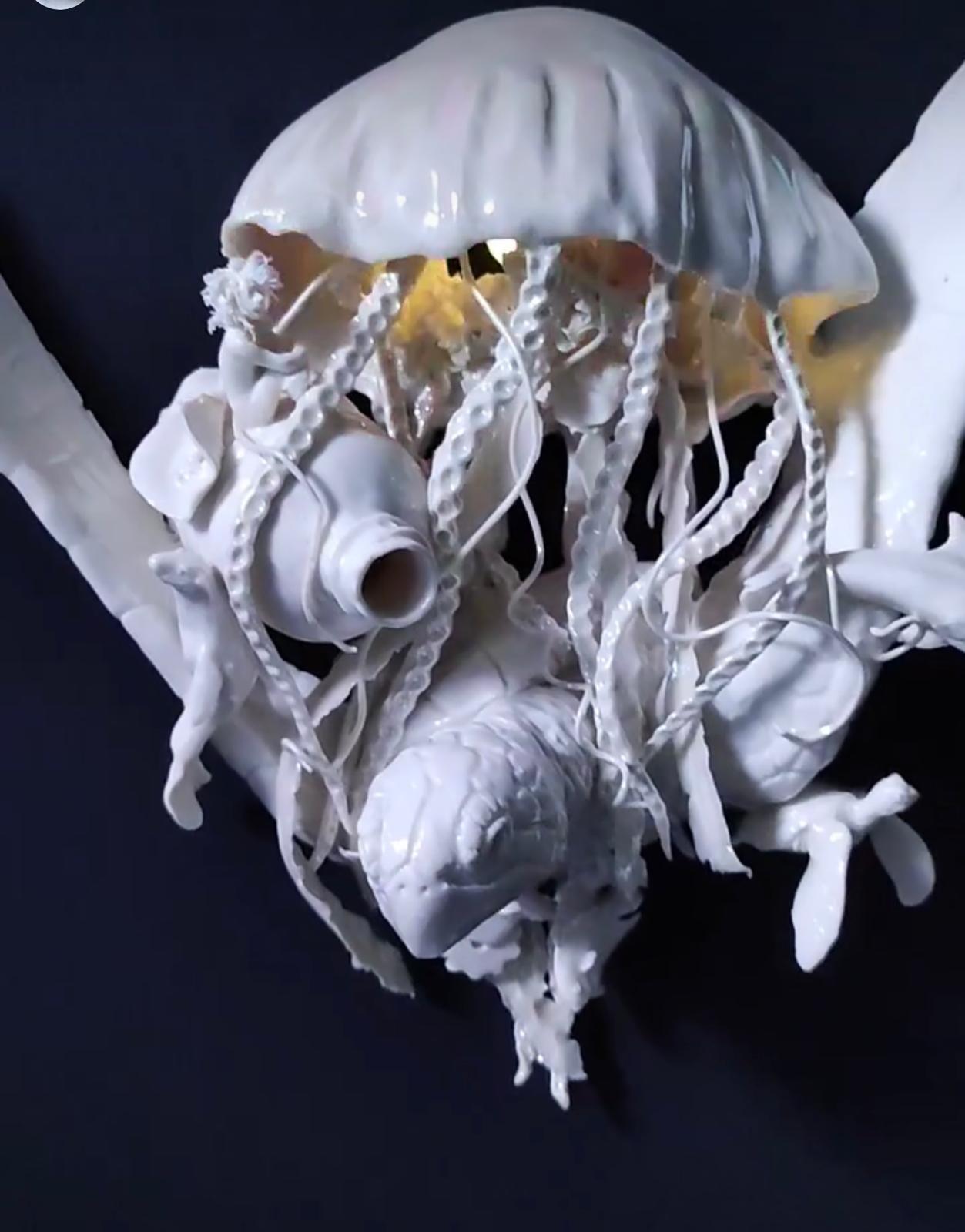
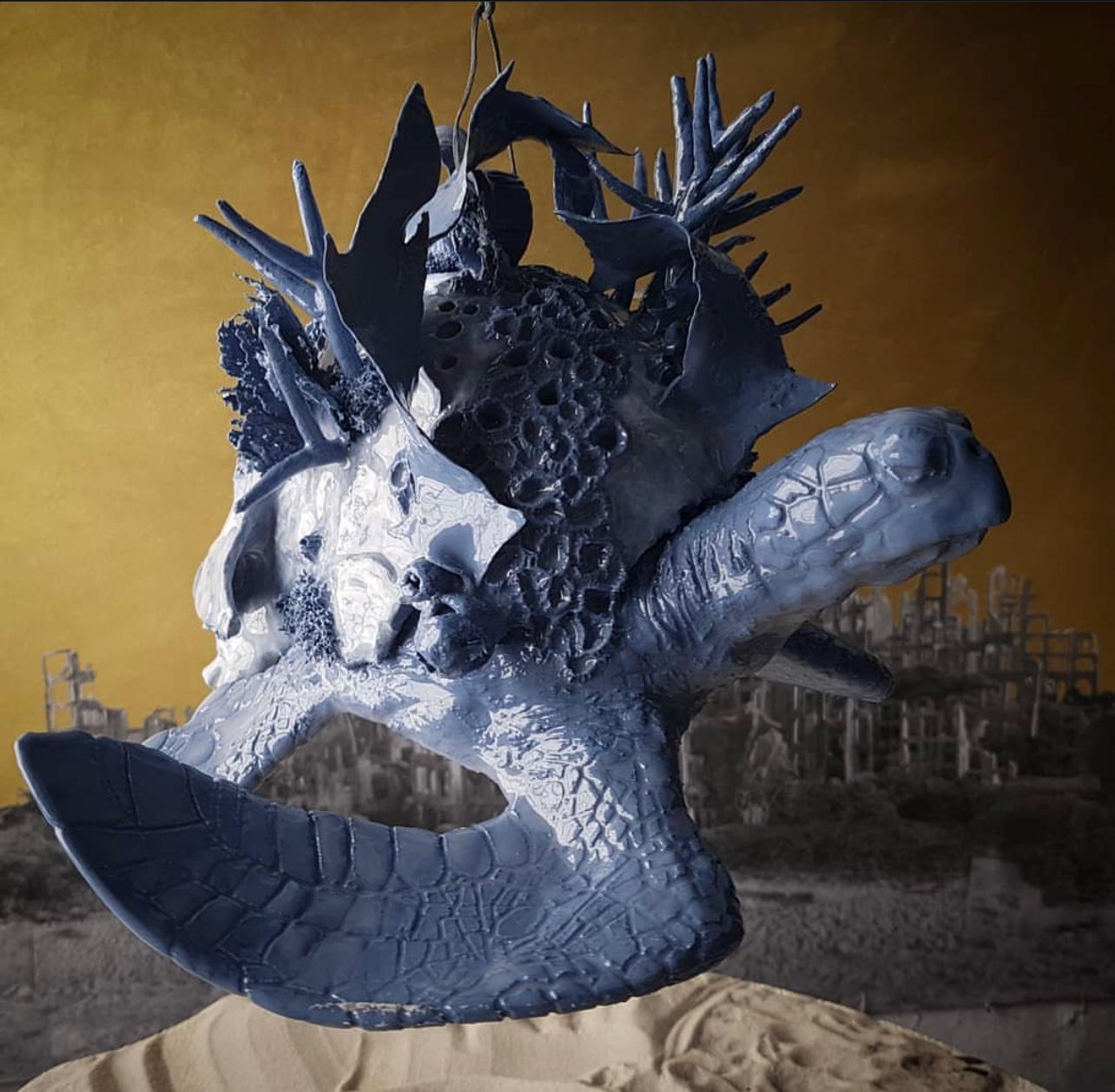
Animals have taken on an increasingly central role in his work, serving not only as metaphors for resilience and adaptability, but also as true protagonists in richly imagined ecological futures. In On the Beach (2020), van Blerk designed a series of turtle-shaped ceramic vessels, part animal, part vehicle, part ruin; that carry fragments of life across the seas to long-abandoned cities. These humorous and melancholic hybrids transport monkeys, lions, elephants, and the remnants of human civilization atop waves of glazed porcelain. The series reflects a growing preoccupation: What if other species were to outlive humanity and rebuild a world from our remains?
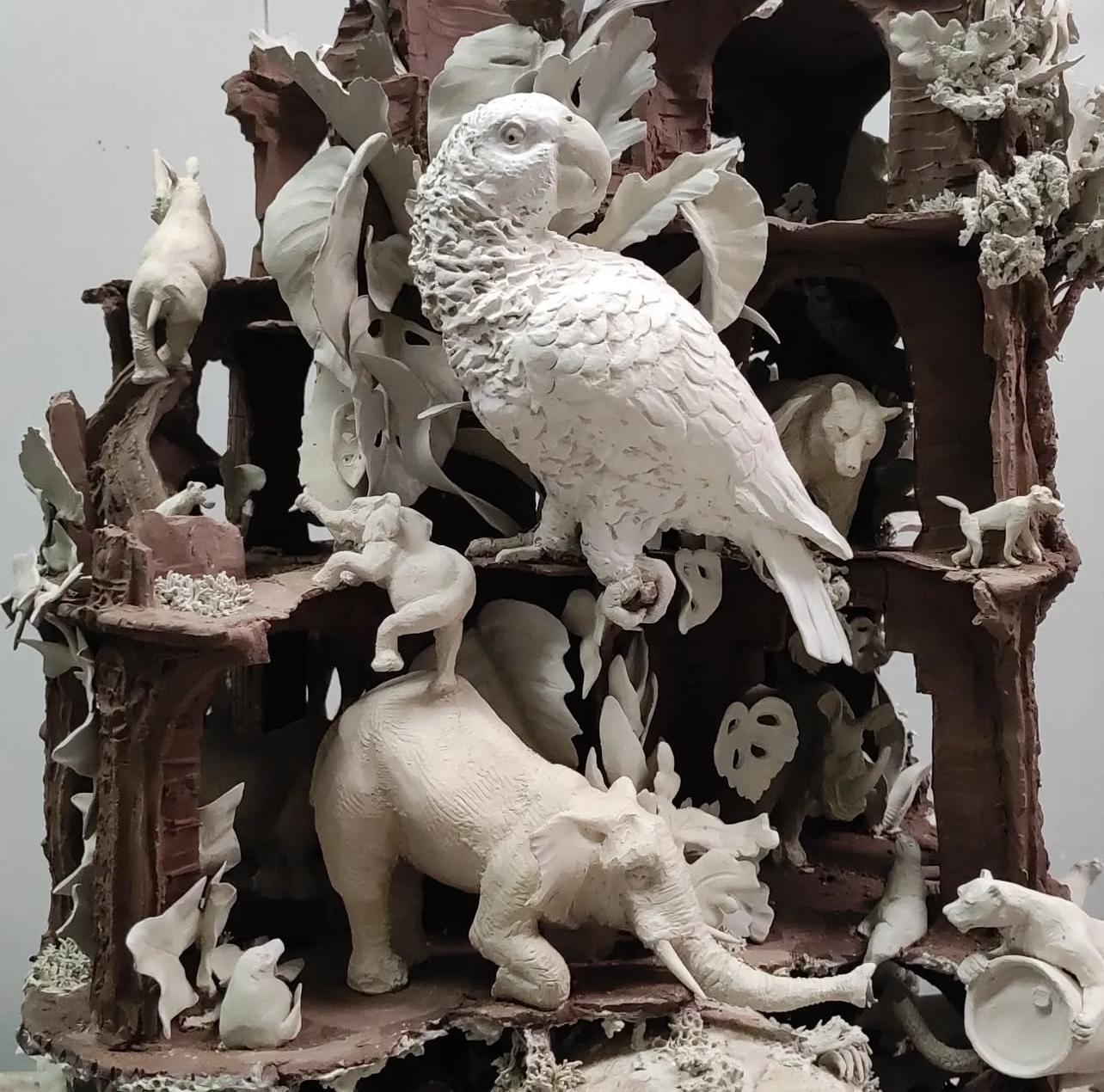
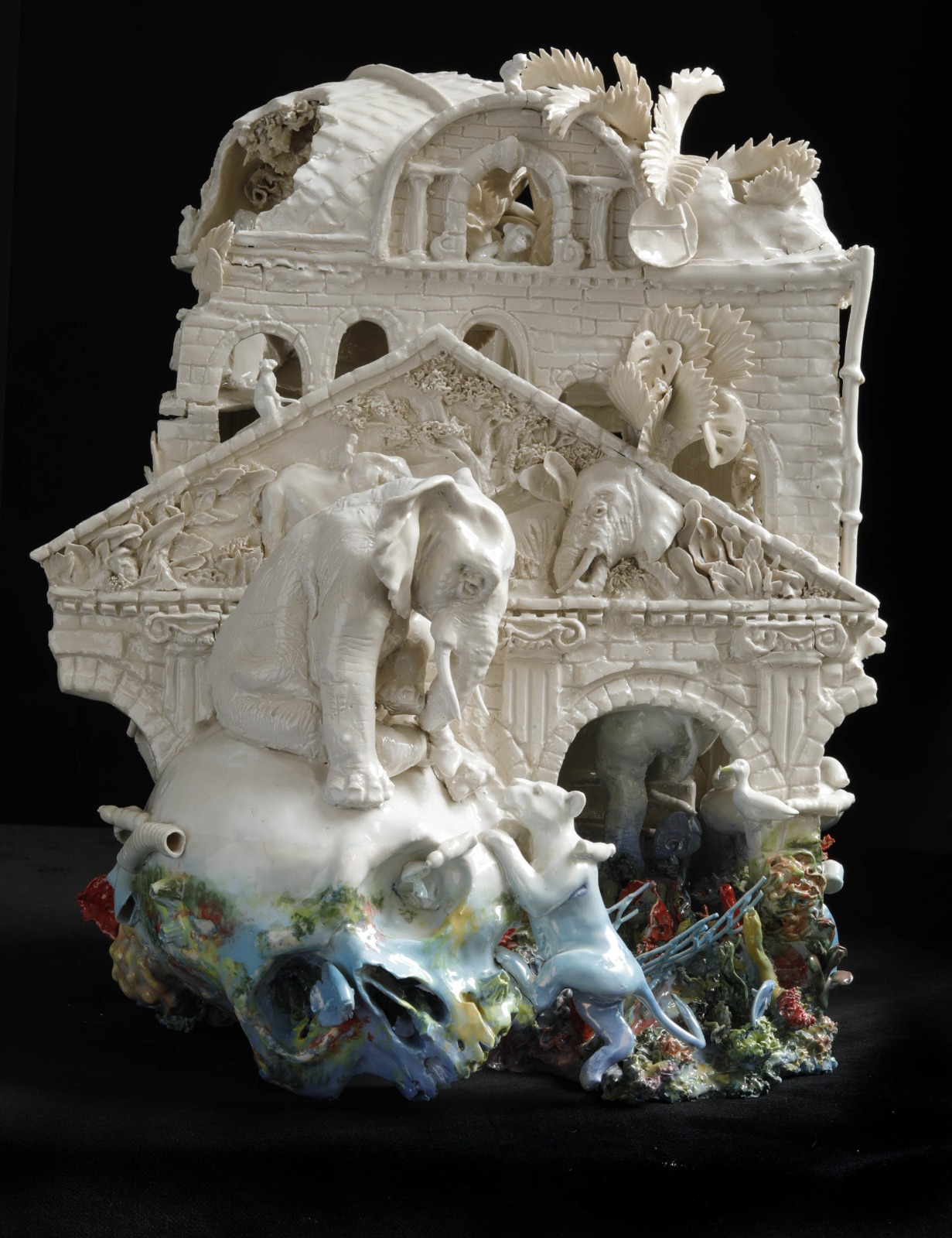
In his more recent works, humans disappear entirely. In Archipel (2023), van Blerk presents a post-human landscape made up of tiny ceramic islets, imagining life after human extinction. These “post-human micro-universes” are composed of architectural ruins, abandoned vehicles, and sculptural fragments, now colonized by hybrid ecosystems of animals and plants. Goats pull carts overflowing with garden produce; elephants have evolved into new forms — some shrunk to ancient size, others enormous and semi-aquatic, their bluish skin sinking into the sea. These scenes evoke both Noah’s Ark and natural history museums, but with a layer of absurdity that subverts nostalgia. Rather than mourning the end of civilization, van Blerk’s islets portray its strange transformation.
Photography remains essential to this speculative ecology. The sculptures, however detailed in the round, often take on new life when re-lit, reframed, and photographed in theatrical close-up. In these images, texture and scale become ambiguous: The miniature acquires monumental presence, while absurd juxtapositions between species gain symbolic power. A porpoise gliding through a ruined tower, a rhinoceros sniffing at a wrecked vehicle, a bird perched on a tree sprouting from a crumbled balcony, all become still-life allegories of survival, displacement, and the absurd logic of evolution. This is a future imagined as one where the ruins of our existence are overtaken by nature, not as a return to Eden, but as a tangled, disorderly survival. In this sense, the islets are neither utopias nor dystopias: They embody continuity within collapse.
Throughout van Blerk’s practice, irony, playfulness, and deep ecological reflection coexist. He aligns himself with the legacy of Enlightenment naturalists like Buffon, imagining not only the classification of species but their recombination in new contexts. Crows, snails, vultures, species that thrive in polluted environments, become figures of adaptation and resistance. By imagining a world in which time no longer follows human narratives and morality loses its conventional bearings, van Blerk invites us to confront the limits of our own perspective.
As we witness floods, fires, and extinctions in real time, his works serve as both mirror and thought experiment. They offer no solutions. They do not preach. Instead, they invite us into surreal, densely populated afterlives where memory, mutation, and absurdity reign.
“A peaceful naturalist resurrection, but also an anxious warning about the future of our society.”
Fay (Fae) Brauer is Professor Emeritus of Art and Visual Culture at the University of East London Centre for Cultural Studies Research and Honorary Professor of Art Theory at The University of New South Wales. The author of many books and articles, she has known Vivian since their residencies, with Justin Fleming in 1998 at the Cite International des Arts in Paris.