EXPLORER
Histoires sans Paroles
Günter Brus, Erik Dietman, Noël Dolla, Françoise Vergier et Brian Wills et Emo de Medeiros
Saturday February 14 19h
Performance Portraits #2 de Capucine Goust
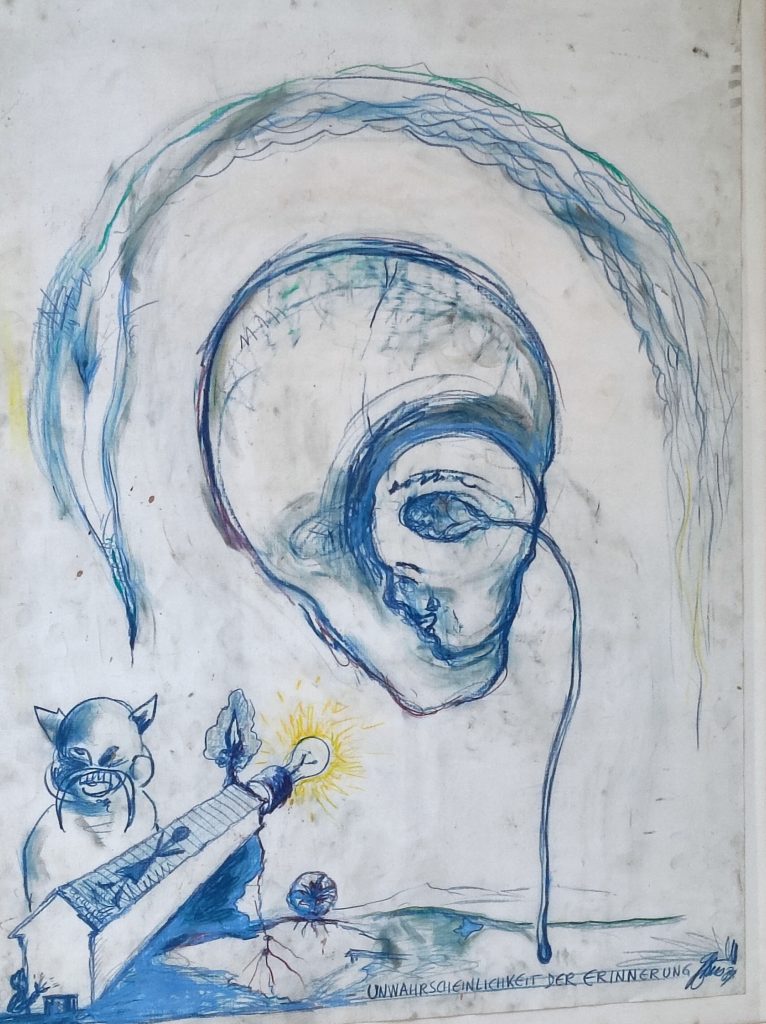
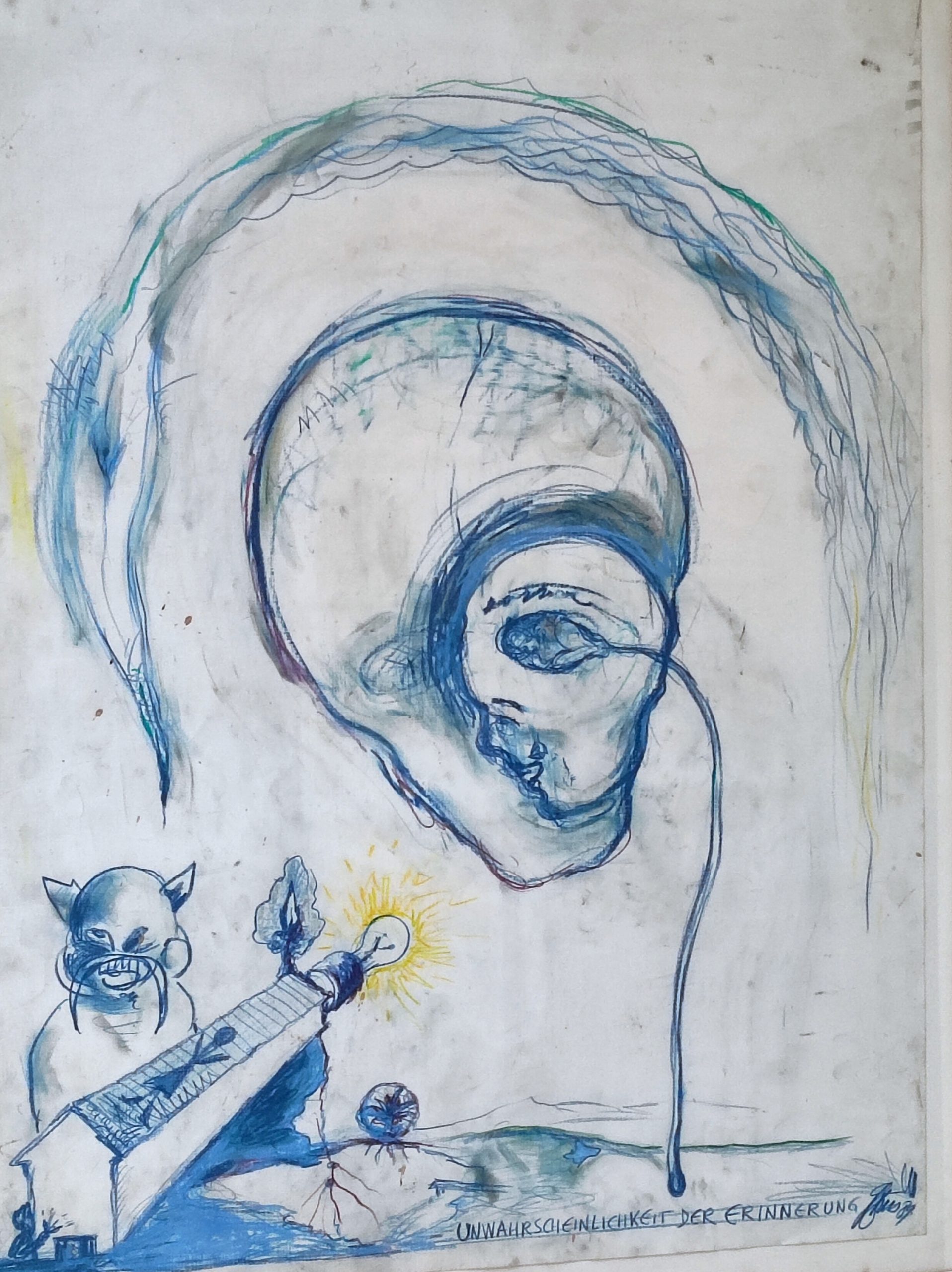
Histoires sans Paroles gathers Günter Brus, Erik Dietman, Noël Dolla, Françoise Vergier, Brian Wills, and Emo de Medeiros in an exhibition shaped by experimentation, tension, and emotion.
Across different geographies, generations, and aesthetic languages, these artists converge in a shared critical intensity. Art is not conceived as the quiet making of objects, but as an act, bodily, material, or conceptual, that presses against the edges of meaning and unsettles the architectures of power that frame our perception.
Their works create a space of freedom where art becomes play. Here, the body is exposed, fragmented, hybridized, while gestures and materials are pushed beyond representation, telling stories that may surprise and disturb. The artists shape a world that interacts with our perception and imagination, disrupting established norms. They invite us to move beyond pure understanding: to feel and to inhabit the slow distillation of meaning that arises through encounter.
Brus inscribes transgression onto the body, confronting moral and political norms. Dietman bends drawing and language toward the absurd, revealing the fragile scaffolding beneath cultural signs and inherited narratives. In Dolla’s work, painting is dismantled into its bare elements: paper, pigment, and gesture break free from representation and illusion. Vergier unsettles the invisible structures of knowledge and power, placing social bodies, institutional narratives and ideological constructions into tension through a “near-representation” of the female body. Will’s repetitive gesture enters into dialogue with the movements and traces of the other artists, creating a visual and sensory rhythm that runs throughout the exhibition. Emo de Medeiros extends these urgencies into a globalized present, where the body hybridizes with technologies, cultural memories, and postcolonial flows.
Real, symbolic, and technological bodies, along with matter and language, enter into dialogue as fields of struggle. The exhibition rejects closed forms, fixed categories, and established hierarchies, proposing instead a space where meaning is born from friction, discomfort, and movement.
Rather than unfolding as a linear narrative, the exhibition operates as a charged field, a constellation of tensions where the radical gestures of the past connect with the critical issues of the present. Here, art asserts itself as a space of experimentation, resistance, and the reconfiguration of the gaze.